Wellness Club — Medications and Supplements
Abingdon, VA. -
Saturday, Mar 1, 2025.
Written by: Anna L. Lyall, PharmD Clinical Health Coach
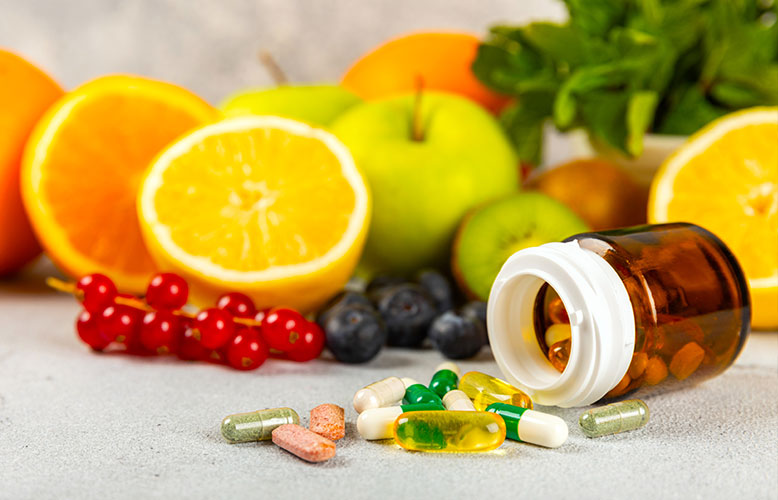
Most over the counter supplements are readily accessible and are promoted for their publicized effects on health performance. As a result, dietary supplements are purchased by millions of consumers throughout the United States every year. Throughout this month’s Wellness Club we hope to provide some brief insight regarding situations where supplementation may be needed, the importance of working in collaboration with a healthcare provider, and the interaction potential among prescription and nonprescription medications.
Know your Medication Profile
All medications, prescription and OTC work to achieve a purpose. As a pharmacist, I encourage all patients to keep a list of prescription, OTC nonprescription, and OTC supplements along with their corresponding directions and indications on you at all times. Your medication profile should be well understood and communicated to all healthcare providers as well as your Food City Pharmacist. Most importantly your medication profile should be evaluated with yourself and a provider regularly.
Considerations
It is important to consider that OTC supplements do not undergo the same rigorous criteria as prescription medications. The FDA does not review supplements for effectiveness (as it does for nonprescription and prescription drugs) before they enter the market. Nonetheless, prescription, OTC medications and OTC supplements can be utilized to promote overall health, fill in nutrition gaps, and manage chronic diseases when advised by your healthcare provider. Your Food City Pharmacist will likely assess a variety of factors when determining if an OTC supplement is right for you. These factors may include the supplements active ingredients, potential efficacy, and metabolism.
Interaction Potential
Supplementation can affect how a prescription drug is metabolized, meaning it could potentially allow your body to absorb more or less of the prescription medication. Ultimately, you may get too much or too little of your prescription or nonprescription medication. For example, the NIH published an article in MedlinePlus Magazine detailing how herbal St. John’s wort can prevent medications like birth control, antidepressants, blood thinners, and some cancer treatments from working correctly. The NIH article also addresses how green tea extract can interfere with medications for heart conditions and other chronic diseases
Don’t assume natural means safe, the ingredients may interact with medications or be dangerous in certain medical conditions. Precaution for supplementation is also highly advised in children, those who are pregnant or breastfeeding, and in those planning to undergo surgery.
Herbs, Supplements, and Vitamins
Glucosamine is a popular supplement sold as glucosamine sulfate, glucosamine hydrochloride, and n-acetyl glucosamine. These supplements are not considered interchangeable. Taken by mouth, Glucosamine sulfate is often considered for osteoarthritis of the knee, and glucosamine hydrochloride might reduce pain related to rheumatoid arthritis. There’s less clinical evidence to support the use of N-acetyl glucosamine in treating osteoarthritis. Because glucosamine products might be derived from the shells of shellfish, there may be concern of a potential allergic reaction in people with shellfish allergies. Glucosamine might worsen asthma may also raise eye pressure, making it a concern for people with glaucoma. Possible interactions of Glucosamine may include Tylenol, Warfarin, and other medications.
Another popular supplement, Coenzyme Q10 also known as CoQ10 is widely used in patients who also take a class of medications known as statins. Statin medications are prescription medications commonly used to lower cholesterol or cardiovascular risk. CoQ10 is an antioxidant that your body produces naturally, it is used by cells for growth and maintenance. CoQ10 may decrease with certain medications, like statins or in certain conditions, like heart disease. Research shows CoQ10 may be beneficial in some heart conditions, statin-induced myopathy, migraines, and physical performance. Possible interactions of CoQ10 may include Warfarin and other medications.
Melatonin is another supplement we will briefly consider. Melatonin is a hormone in your body that plays a role in sleep. Typically, melatonin production increases at night and decreases in the day. However, overall melatonin production declines with age. Melatonin has been shown to help sleep disorders, insomnia (may slightly reduce the time it takes to fall asleep), and jet lag. Possible interactions of Melatonin may include blood thinners, seizure medications, blood pressure drugs, anti-anxiety or depression medications, diabetes medications, birth control, Luvox (an Obsessive-compulsive disorder “OCD” medication), immunosupressants, and more.
Conclusion
Sometimes it is easy to get caught up in the world of supplementation. While research has shown that certain supplements may be beneficial in certain conditions, nutrient gaps, and health issues these results are not all inclusive and are often mixed. It is important to discuss the agent with your healthcare provider to determine if the supplement will fit your individualized needs while not interacting with other prescription and nonprescription medications on your profile.
This article is intended for information purposes, please speak with your health care provider concerning individualized health care.
References:
https://www.mayoclinic.org/drugs-supplements
https://magazine.medlineplus.gov/article/did-you-know-supplements-and-medications-can-interact-in-unexpected-ways/
https://www.fda.gov/consumers/consumer-updates/mixing-medications-and-dietary-supplements-can-endanger-your-health