Wellness Club — Tips for Adding More Produce During Winter
Abingdon, VA. -
Monday, Dec 1, 2025.
Written by: Nicole Pazdziorko, RDN, LDN
As we retreat inside during the winter months, hearty comfort dishes tend to come front and center, while lighter, produce-centered meals take a back seat. At the same time, winter is peak season for cold and flu, while fiber, vitamins and minerals from fruits and vegetables play a key role in building immune health. Higher fruit and vegetable intake is consistently linked with better health outcomes, including increased longevity, and lower risk of chronic disease.
To beat the winter blues, aim to add more fruits and veggies to your meal plan with these tips:
Choose Fresh Seasonal Produce Picks
While summer brings to mind fresh produce picks like tomatoes, string beans or corn and autumn instantly reminds us of harvest vegetables like squash, pumpkins and apples, many of us tend to forget that some fruits and vegetables taste best during winter months.
Spotlight some of these winter produce stars:
- Citrus like oranges, grapefruit and clementines are rich in the antioxidant vitamin C, and perfect for brightening salads or snacking.
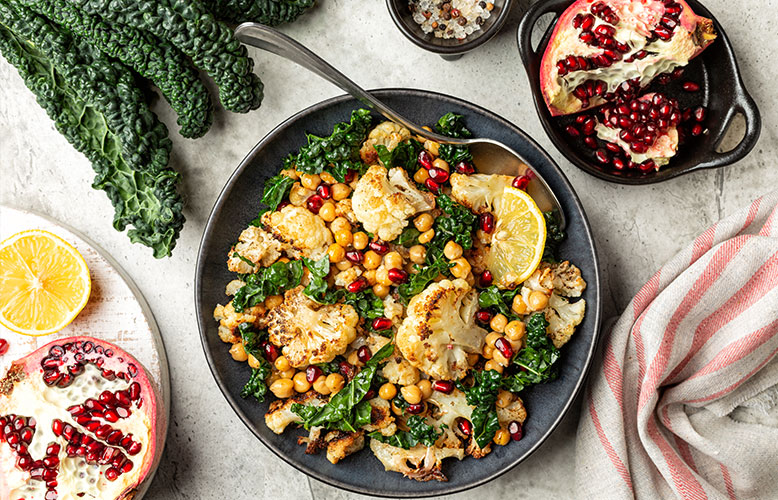
- Greens like kale, chard and brussels sprouts are full of vitamin K and fiber, great for sautéing or roasting
- Pomegranates offer vitamin C and bright pop of color to yogurt bowls and appetizers
- Winter squashes like acorn, butternut or spaghetti squash contain vitamin A and are great for roasting, pureeing or adding to pasta
- Root vegetables like turnips, beets or parsnips make thrive in cold weather and are excellent for sheet pan meals or the slow cooker
Serve Nourishing Soups and Stews
One of the easiest and most delicious ways to make veggies the star of winter meals, soups and stews are comforting and versatile. Simply rotate your favorite vegetables, proteins, starches and spices and voila!
Try these tips for making hearty and delicious soups all winter long.
- Start with the base of your soup by adding your aromatics, carrots, celery and potatoes
- Add in extra veggies for bulk – zucchini, tomatoes, mushrooms or beans will boost fiber, nutrients and texture
- Choose broth-based soups or blended vegetable soups for a lighter option
- Batch cook and freeze so you always have a veggie heavy option ready for busy nights
Keep Frozen Vegetables on Hand for Quick Dinners
Frozen fruits and vegetables can be just as nutritious as fresh. They’re picked at their peak, frozen and frozen within 24 hours, locking in flavor, vitamins and minerals. Keeping frozen produce on hand makes getting vegetables on your plate accessible, easy and affordable all year long.
- Toss frozen broccoli, spinach or mixed vegetables into pasta, stir-fries or casseroles
- Add frozen stir-fry blends for instant color and crunch
- Keep frozen berries or mangos for smoothies and yogurt bowls
- Try roasting your frozen vegetables for a smoky flavor and crisper texture
Sneak Veggies into Favorite Cold-Weather Comfort Dishes
Enjoy your winter comfort dishes while still making them produce-packed with a few simple tweaks.
- Stir spinach into lasagna, omelets or skillet dishes
- Add shredded carrots, mushrooms and zucchini to meatloaf, meatballs, chili or pasta sauce
- Stir butternut squash into macaroni and cheese for a silky texture
- Mix cauliflower into fried rice or tacos for extra volume
- Load pizza with bell peppers, spinach, fresh tomatoes and mushrooms
A little creativity can bring more color and flavor to cold-weather meals. Whether stocking up on seasonal fruit, bulking soups with vegetables or keeping frozen staples on hand, small changes to increase fruits and vegetables in your meal plan can make a meaningful impact on your health.