Wellness Club—Colder Weather Meals
Abingdon, VA. -
Thursday, Oct 22, 2026.
Written By: Chastity O'Quinn, RDN, LDN
Cold Weather Meals, Warm, Nourishing, and Satisfying
As the seasons change, our meal choices often shift toward foods that are warm, filling, and comforting. With a few nutritious ingredients, those favorite cold-weather dishes can help support energy, immunity, and overall wellness.
Warm Foods in Cold Weather
During colder months, warm meals often feel more comforting and satisfying. Soups, stews, casseroles, and slow-cooked dishes can help us feel fuller while providing important nutrients. However, comfort food doesn't have to mean heavy or overly indulgent. Small ingredient swaps can boost nutrition without sacrificing flavor.
Build a Balanced Cold Weather Meal
A nutritious cold weather meal should include:
- Protein to help maintain muscle and keep you feeling satisfied
- Fiber-rich carbohydrates for steady energy
- Vegetables and fruits for vitamins, minerals, and antioxidants
- Healthy fats to support heart and brain health
A simple formula is to fill half your plate with vegetables, one-quarter with lean protein, and one-quarter with whole grains or starchy vegetables.
Nutritious Cold Weather Meal Ideas:
Hearty Chili
Chili is a cold-weather favorite that can be packed with nutrition. Use lean ground turkey, chicken, or beans as your protein source. Add tomatoes, onions, peppers, and pumpkin puree for extra fiber and nutrients. Serve with a side salad or a small portion of whole-grain cornbread.
Protein-Packed Soups
Soup is an easy way to increase vegetable intake. Consider:
- Pumpkin soup blended with cottage cheese for added protein
- Chicken and vegetable soup
- Lentil soup
- White bean and kale soup
Adding beans, lentils, or Greek yogurt can increase protein while maintaining a creamy texture.
Slow Cooker Stews
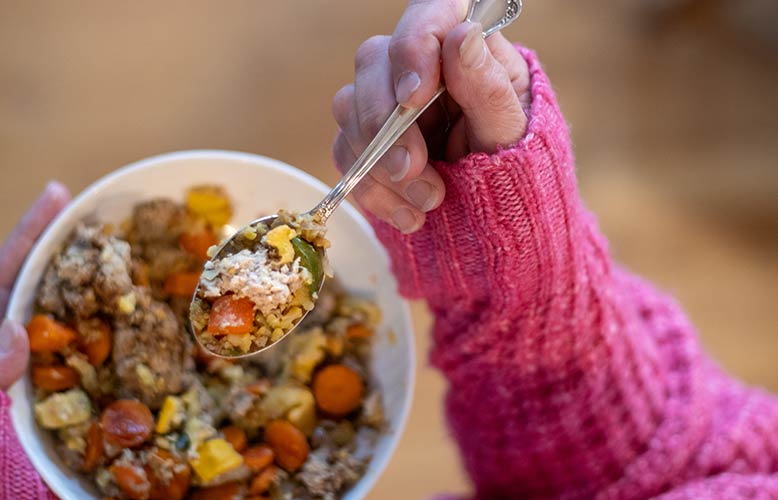
Stews are perfect for busy days and can provide a complete meal in one bowl. Combine lean beef, chicken, or beans with vegetables such as sweet potatoes, carrots, onions, and celery. The slow cooking process allows flavors to develop while keeping preparation simple.
Quinoa Casseroles
If you're looking for a comforting meal that the whole family will enjoy, try a Quinoa Pizza Casserole. This dish combines quinoa, lean ground turkey, pizza sauce, vegetables, and cheese for a balanced meal that delivers protein, fiber, and plenty of flavor. It offers the familiar taste of pizza while incorporating nutrient-rich ingredients that help support fullness and overall health
Breakfast-for-Dinner
Warm breakfast dishes aren't just for mornings. Consider:
- Vegetable egg casseroles
- Pumpkin baked oatmeal
- Protein waffles topped with fruit
- Overnight oats warmed before serving
These meals can be comforting while delivering important nutrients.
Seasonal Produce to Enjoy
Fall and winter bring a variety of nutrient-dense produce, including:
- Sweet potatoes
- Pumpkin
- Winter squash
- Pears
- Pomegranates
- Brussels sprouts
- Kale
- Cabbage
These foods provide fiber and important nutrients such as vitamin C, vitamin A, potassium, and antioxidants that support overall health.
Smart Comfort Food Upgrades
A few simple changes can make favorite comfort foods more nutritious:
- Use Greek yogurt in place of some sour cream or heavy cream.
- Add beans or lentils to soups, stews, and casseroles.
- Choose whole grains such as quinoa, brown rice, or oats.
- Incorporate extra vegetables into pasta dishes and casseroles.
- Use herbs and spices to add flavor while reducing the need for excess salt.
Bringing Comfort and Nutrition Together
Cold weather meals offer an opportunity to enjoy foods that are both comforting and nourishing. By focusing on lean proteins, whole grains, seasonal produce, and healthy fats, you can create meals that help you stay satisfied, energized, and well-nourished throughout the colder months. So, grab a soup pot, heat up the slow cooker, and make the most of the season with warm meals that support your health and wellness goals.