Wellness Club — Summer Skin Care
Abingdon, VA. -
Sunday, Jul 1, 2018.
by Rebecca Webb, PharmD Pharmacy Clinical Services Manager, K-VA-T Food Stores
Summer is finally here and it is time to brush up on your sun and skin care 101. Knowing the facts on sun exposure, sunburn, skin cancer, and how to prevent them are of utmost importance this time of year. Nearly everyone at some point in their lifetime has experienced a sunburn. Many people have family members or friends that have been affected by skin cancer. It is the most common form of cancer in the United States. We can all relate to the effects of the sun and the consequences of not protecting ourselves from its exposure.
It is important for your health to know about sun exposure. The sun emits ultraviolet (UV) radiation that can have damaging effects on your skin. Two types of detrimental UV radiation are ultraviolet A (UVA) and ultraviolet B (UVB) rays. UVB rays are the primary cause of sunburn. UVA rays can age skin and cause wrinkles. Exposure to both types of radiation is associated with developing skin cancer. UV rays can reflect off surfaces like water, sand, snow, and pavement, thus increasing the risk of damage. The effect of clouds on UV rays can vary, so damage can still occur when it is overcast. It is important to note that artificial sources like tanning beds are also sources of UV rays. It is crucial for everyone to protect their skin from this exposure at all times.
Sunburn and Skin Cancer Prevention Recommendations
Prevention is the best approach to sunburn and skin cancer. Do not underestimate the importance of taking the necessary precautions.
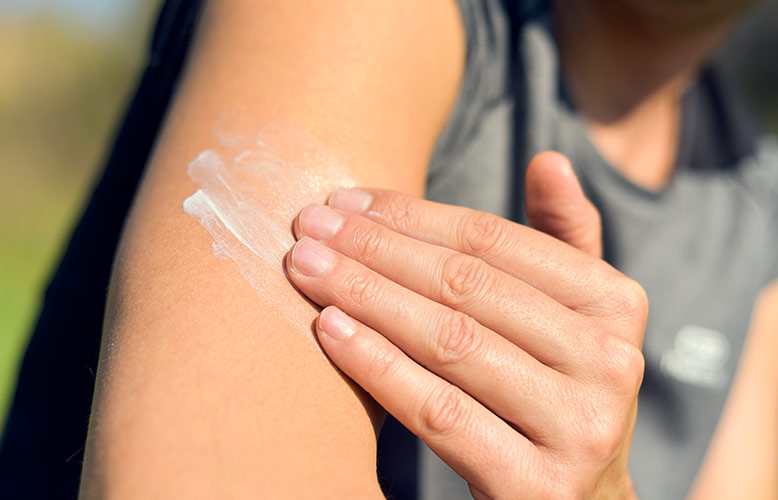
Use sunscreen. Sunscreens prevent UV damage by absorbing, scattering, or reflecting UV radiation. Choosing the proper sunscreen and using it appropriately can reduce the occurrence of sun-induced skin cancers. There are several important factors to consider when selecting the most suitable choice.
• Choose a sunscreen with broad-spectrum coverage that protects against both UVA and UVB rays.
• Consider the sun protection factor (SPF) of the sunscreen. This indicates how effective the sunscreen is in protecting against the sun’s UVB radiation. The higher the SPF, the greater the protection. It is recommended to choose a SPF of at least 30.
• If your activities involve water in any way, look for “water resistant” or “very water resistant” on the label.
• Address any specific needs you may have when choosing a sunscreen. These can include selecting sunscreens for individuals with sensitive skin or ones targeted for use in children.
• Select from the various forms of sunscreen. These can include commonly used creams and lotions, which are best for dry skin. There are also gels, which work well on areas covered with hair. Sunscreen sticks are good for applying to the face and for oily skin. Sunscreen sprays are popular with their ease of use. However, these must be rubbed into the skin after application and the product must not be inhaled.
Effectively utilizing sunscreen is just as important as selecting the best product. There are a few essential steps to follow for the proper use of sunscreen.
• Always check the sunscreen’s expiration date.
• Apply the sunscreen to dry skin, 15 to 30 minutes prior to sun exposure.
• Distribute the sunscreen uniformly to all exposed skin.
• Use at least one ounce of sunscreen, or enough to fill a shot glass. This is the amount recommended for an average adult and it should be adjusted according to body size.
• Be sure to apply sunscreen to the face, scalp, ears, neck, backs of hands, and tops of feet.
• Reapply sunscreen about every 2 hours during sun exposure.
• Immediately reapply sunscreen after swimming or excessive sweating.
In addition to sunscreen, utilize:
• Sunglasses that block both UVA and UVB rays
• Umbrellas
• Wide-brimmed hats that shade your face, head, ears, and neck
• Lightweight, protective clothing
• Lip balm with a SPF of at least 15
Prevention also includes knowing there are a number of commonly used medications that may cause photosensitivity. Ask your local Food City Pharmacist if you are taking any medications that may increase your sensitivity to sunlight.
***Consult your local Food City Pharmacist about additional information regarding sunburn and skin cancer***